
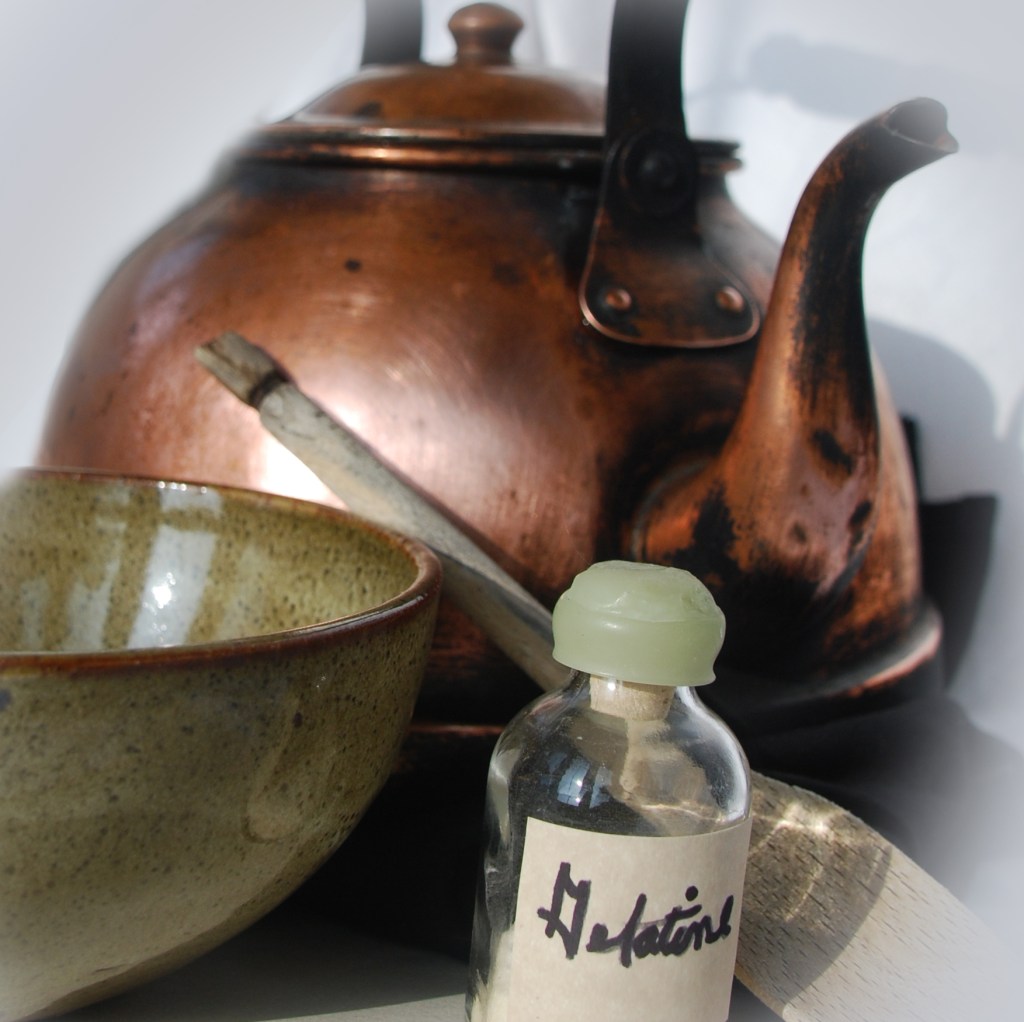
Paper has been used for centuries, and with the passing of time we came to know of its weaknesses and its prone to deterioration. Historically, sizing became a way to strengthen the paper while use and aid in its preservation. Gelatin, a derivative from bones and tissue of animals, was one way to accomplish this.
Fabriano, an Italian town, has been credited to developing sizing with Gelatin (1.). Examples still survive today to prove its endurance. Matelica holds a parchment created in Fabriano from 1264, created from cotton and sized with animal gelatin (2.) The early developments of sizing came to inhibit the use of iron gall ink, as studied by Gesa Kolbe in her avid research and examination of the environmental effects with the use of gelatin (3.) Gelatin had its use in the 1700s. Koestler mentions “Historically, until the end of the 18th century, gelatin was used as surface sizing for Western papers” in their studies of the biodeterioration of art (4.). Gelatin would be an appropriate way to size paper for reproduction of 18th century arts today.
Here we are using Gelatin as sizing for use with watercolor paints. It hardens the paper to prevent further expansion when the water is applied. I also found it gives more vibrancy to the colors. The method we will explore here is external sizing. As the name suggests, the gelatin is applied to the paper on its surface, either by dipping into the solution, or brushing directly on to it.
Below is the formula I experimented in recreating sized paper with gelatin. Be sure to take care with boiling water. Youths please have an adult prepare this for you.
Gelatin Sizing
Dissolve one packet .25 oz of gelatin into 4 cups of boiling water. **CAUTION**HOT**
Lay paper in a tray and brush generously on. Gelatin will congeal as it cools, so be prepared to work swiftly.
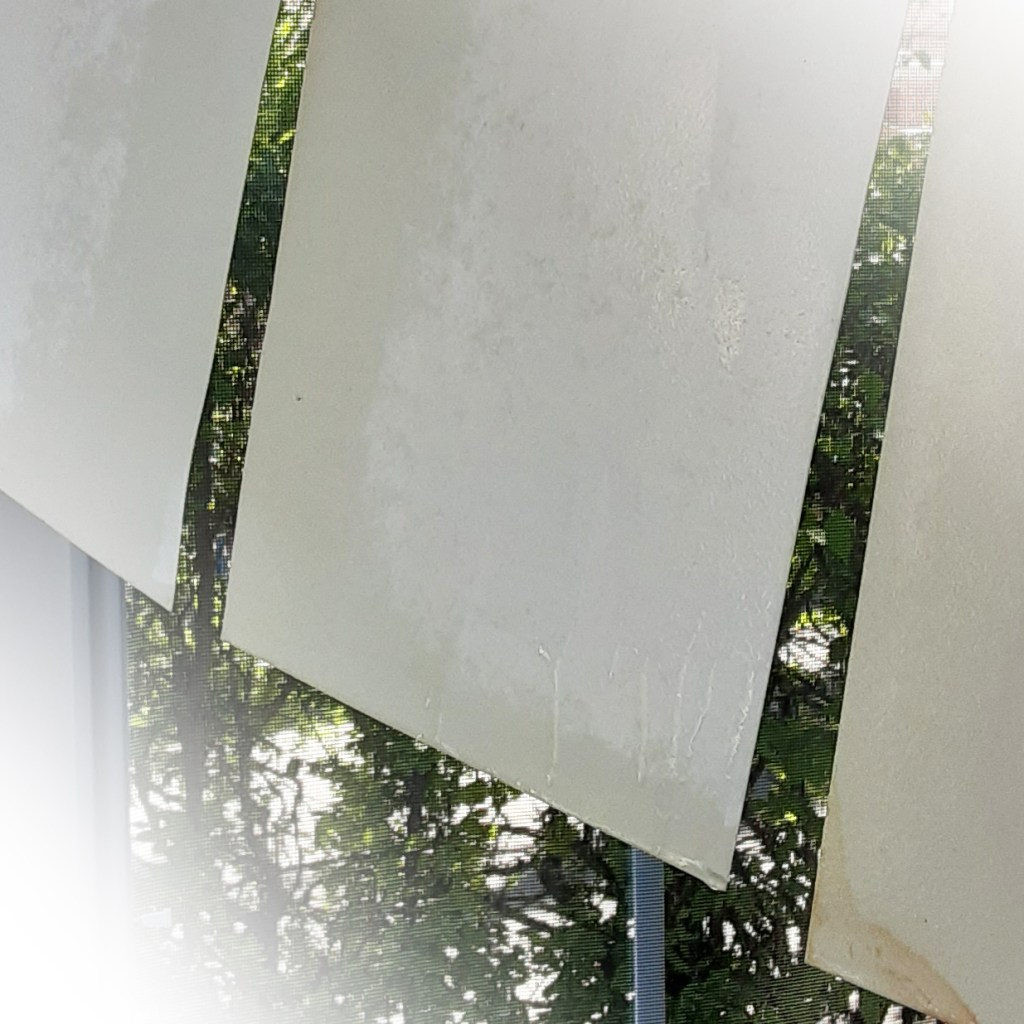
Hang the sheets to dry for 1 to 3 days. Be sure to protect the floor from drips. Discoloration and warping should be expected. Paper can be flattened after fully dried with a press or heavy objects.
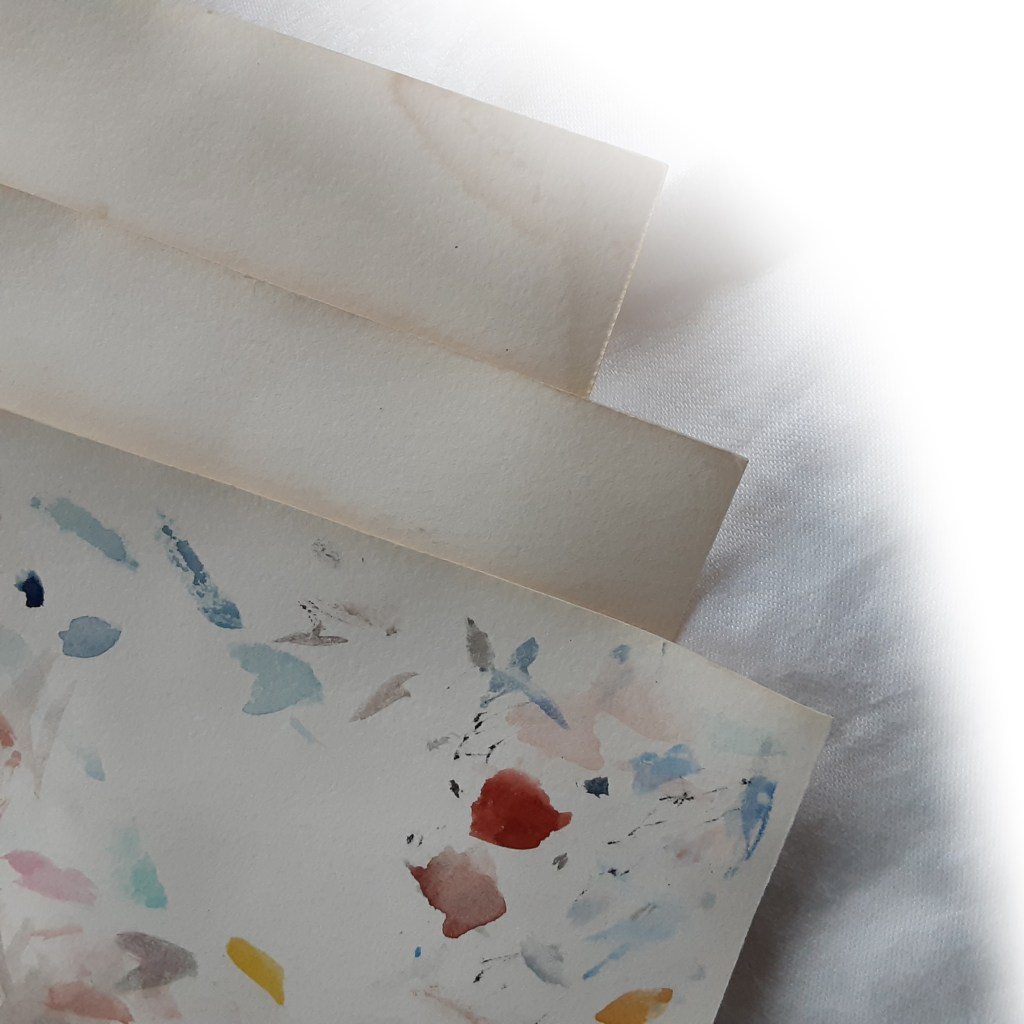
Other studies including sizing I am researching contain starches, as well as the adding of alum to the gelatin. I hope to share those methods with you in the future!
References
- Fabriano Paper in Library of Congress Collections. January 31, 2017 by Nathan Dorn and Sylvia Albro, https://blogs.loc.gov/law/2017/01/fabriano-paper-in-library-of-congress-collections/
- Fabriano – Born with Paper, copyright 2021, Fabriano Paper Company, https://fabriano.com/en/history/
- Gelatine in Historical Paper Production and as Inhibiting Agent for Iron-Gall Ink Corrosion on Paper by Gesa Kolbe https://studylib.net/doc/7386738/gelatine-in-historical-paper-production-and-as-inhibiting.
- Art, Biology and Conservation: Biodeterioration of Works of Art. 2003 Edited by Robert John Koestler and Victoria H Koestler, p143
 Salonnière Aquarelle